
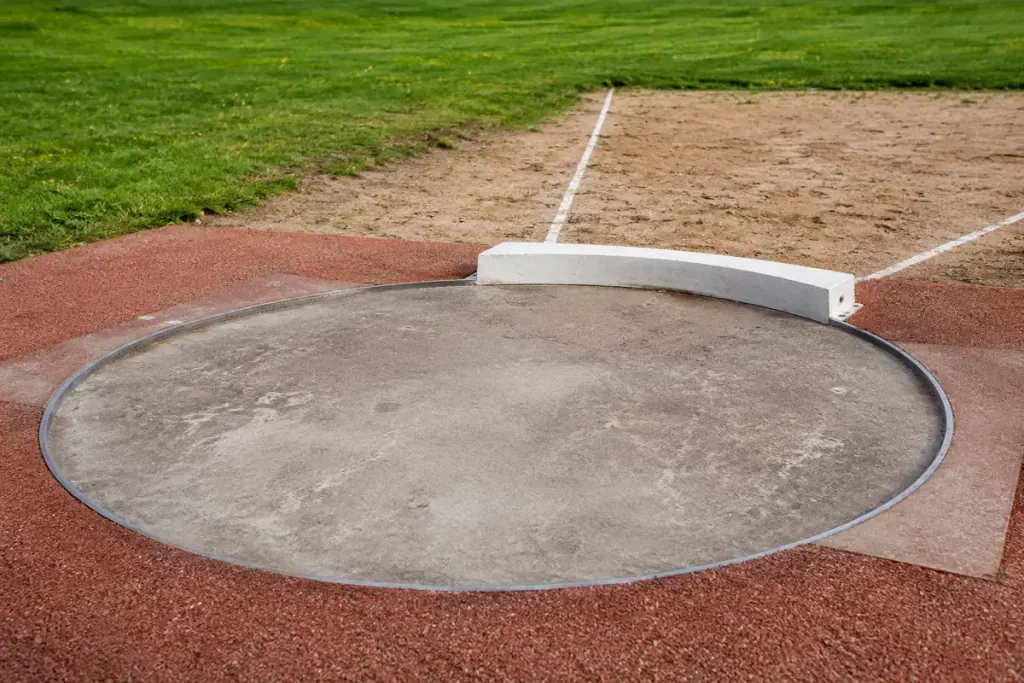
The shot lands a long way from the circle, the crowd reacts, and then the official raises a red flag. Distance is only one part of a shot-put result. The athlete must also complete a valid attempt inside a tightly defined space.
World Athletics’ event guide describes a circle 2.135 metres in diameter with a stop board at the front. The shot is put from the shoulder with one hand. For a spectator, the board is a useful reference point: it marks the front of the working area, but it is not a step that the athlete can stand on during the put.
Inside face and top surface are different
The 2026 Technical Rules, particularly Rules 32 and 33, distinguish permitted contact with the stop board’s inner side from contact with its top. They also define the stationary starting position and contain specific exceptions concerning some incidental contacts. A brief television angle is not always enough to decide a close case.
Keep watching after the release
The athlete must not leave the circle before the shot lands, and the exit must satisfy the rear-half requirement. The shot also needs to land within the prescribed sector. These requirements explain why a powerful release is followed by a moment of balance and a deliberate exit.
For your next competition, try watching one attempt in three stages. First, notice the setup. Second, follow the release without losing sight of the athlete’s feet. Third, keep watching the circle until the athlete leaves it. Then compare what you noticed with the official signal and measured result.
If a replay is available, use it to answer one question at a time rather than scanning for any possible fault. Was the concern a foot on the board, the landing position or the exit? Separating those questions makes the event easier to follow and avoids assuming that every red flag has the same cause.
This is a spectator’s introduction, not a complete officiating guide. Competition officials apply the full rules and their viewing positions matter. Anyone learning to put should use an organised throwing area with a qualified coach, because the landing sector must remain clear. The small circle is part of both the skill and the discipline of the event.