
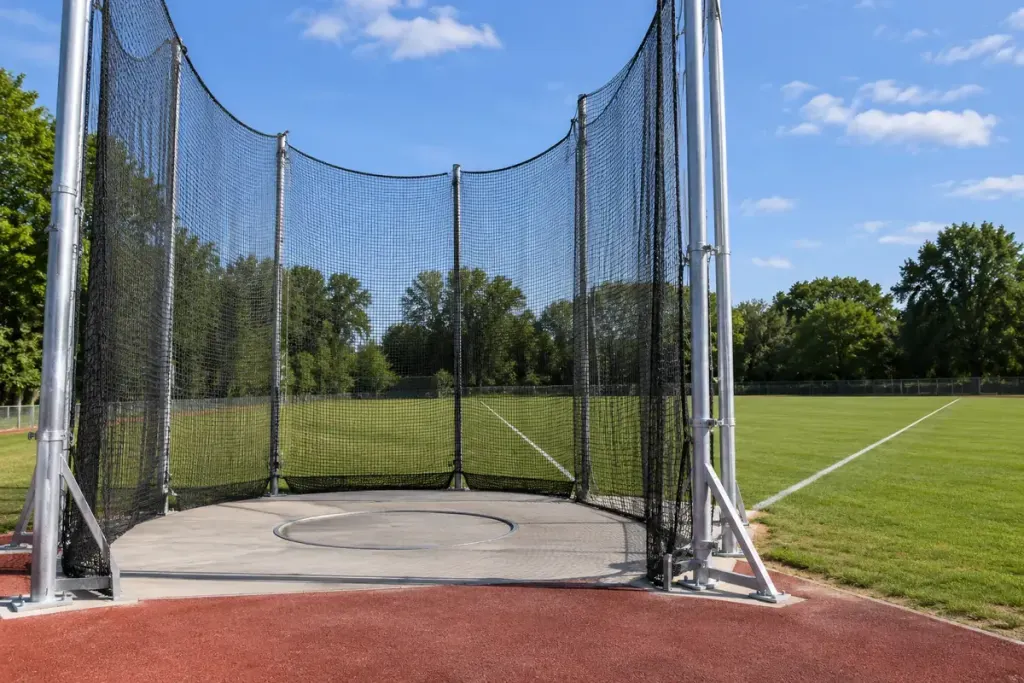
The marked landing sector attracts the eye at a hammer competition. The implement is supposed to land within it for a valid attempt. That does not make every place outside those lines safe for a spectator.
A hammer can be released in an unintended direction. The cage, its opening and the management of the surrounding area address that possibility. The cage therefore belongs to the safety arrangements around the throw, while the sector also serves the rules for judging a result.
World Athletics’ Competition and Technical Rules specify the hammer cage and discuss its protective purpose. The movable panels and their correct positioning are operational matters for qualified officials, not optional scenery around the circle.
Watch what officials control
From the designated viewing area, you may see an official check that the field is clear before an attempt. Retrieval and measurement happen within an organised sequence. A pause does not automatically mean the area is open for someone to cross.
At a mixed athletics meeting, another event can make the ground look busy and informal. Follow barriers and steward instructions even when a route appears shorter across the infield. Never retrieve an implement unless that is your assigned role and the supervising official has cleared the action.
Explain the difference to a new spectator
A useful introduction is to point out three separate spaces: the throwing circle, the sector used to judge the landing, and the authorised spectator area. Explain that the last of these is established by the event’s safety plan, not by extending a painted line in your imagination.
If a child asks why the athlete throws through such a large cage, the answer can remain simple: it helps contain an implement released in an unintended direction. The correct response is still to stay behind the viewing boundary.
Appreciating the cage makes the event easier to follow without encouraging anyone to test the limits of its protection.