
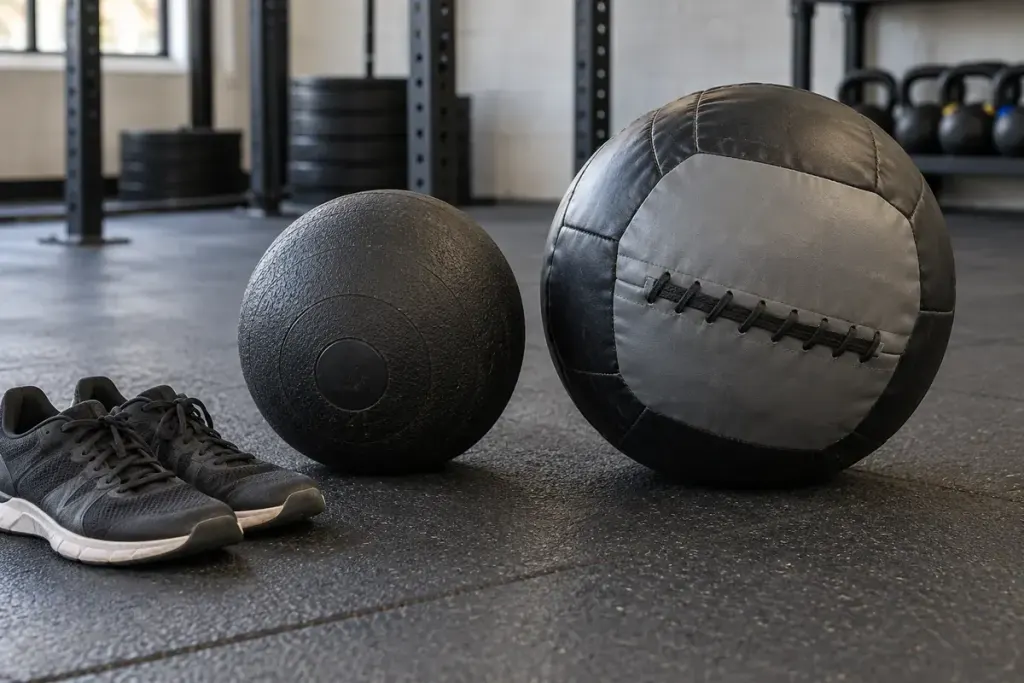
A weighted ball is sitting beside the training area. It feels sturdy, and another person has been throwing a similar-looking ball down onto the floor. Neither observation tells you whether this particular ball is designed for that use.
Medicine balls, wall balls and slam balls can have different construction and intended exercises. Product names alone are not a reliable substitute for the manufacturer’s instructions.
Match the exercise to the actual product
Look for the model label and its approved uses. As a concrete example, Rogue’s medicine-ball product guidance states that those balls are not intended for slams. That restriction applies even though the equipment is sold for demanding training.
If the label is missing, ask the gym staff to identify the ball. Do not test its suitability by throwing it harder. An uncertain piece of equipment can be set aside while its intended use is checked.
Inspect the cover, seams and valve area for damage before use. Follow the facility’s reporting process when a ball is split, leaking or otherwise questionable. The fact that it survived yesterday’s session does not establish that it is sound today.
Check the space as well as the ball
For an approved exercise, confirm the permitted floor or target surface and the space needed around it. A ball’s rebound can differ from another model’s, so keep other people and loose equipment outside the working area.
Ask a qualified coach to demonstrate an unfamiliar movement and choose an appropriate load. A heavier ball is not automatically a better starting point. Stop if the movement causes pain, and seek appropriate advice rather than changing technique through discomfort.
A clear equipment rack can help everyone: group items by their approved use and keep the model information available. The useful distinction is what each ball is designed to do, not simply its colour, size or place on the shelf.