Training Records
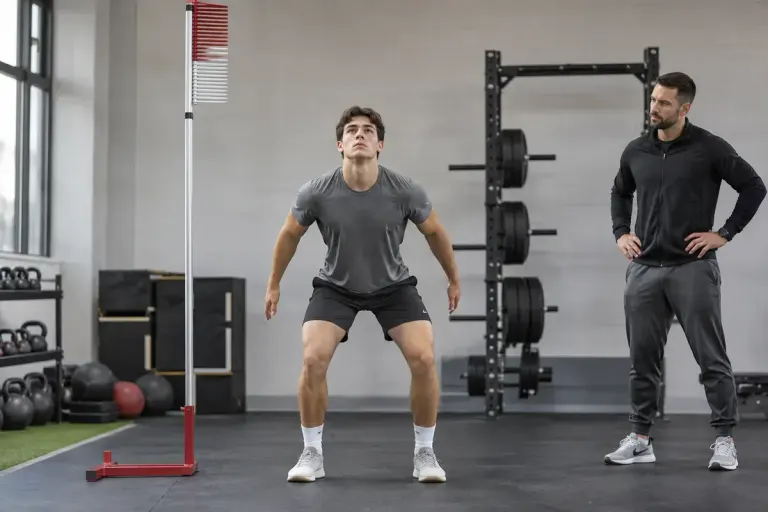
Why a squat jump and a countermovement jump need separate records
A squat jump and a countermovement jump begin differently. Keep the protocol clear so a change in technique is not mistaken for a change in performance.

Move with purpose. Build a routine that fits.
A squat jump and a countermovement jump begin differently. Keep the protocol clear so a change in technique is not mistaken for a change in performance.

Heart-rate recovery is meaningful only with the measurement method attached. Keep timing and recovery conditions consistent before comparing workout records.

Make effort ratings in your training log comparable by using the same scale, timing and context, rather than treating every number as a universal measure.

Record assisted pull-up settings clearly so less assistance is not mistaken for a lighter effort or compared directly with unrelated machines.

Make single-leg exercise notes unambiguous by recording repetitions per side, set order and load consistently instead of mixing totals across sessions.

Record an isometric exercise with its hold time, position and variation so that a training log compares the same task instead of treating every hold as interchangeable.