
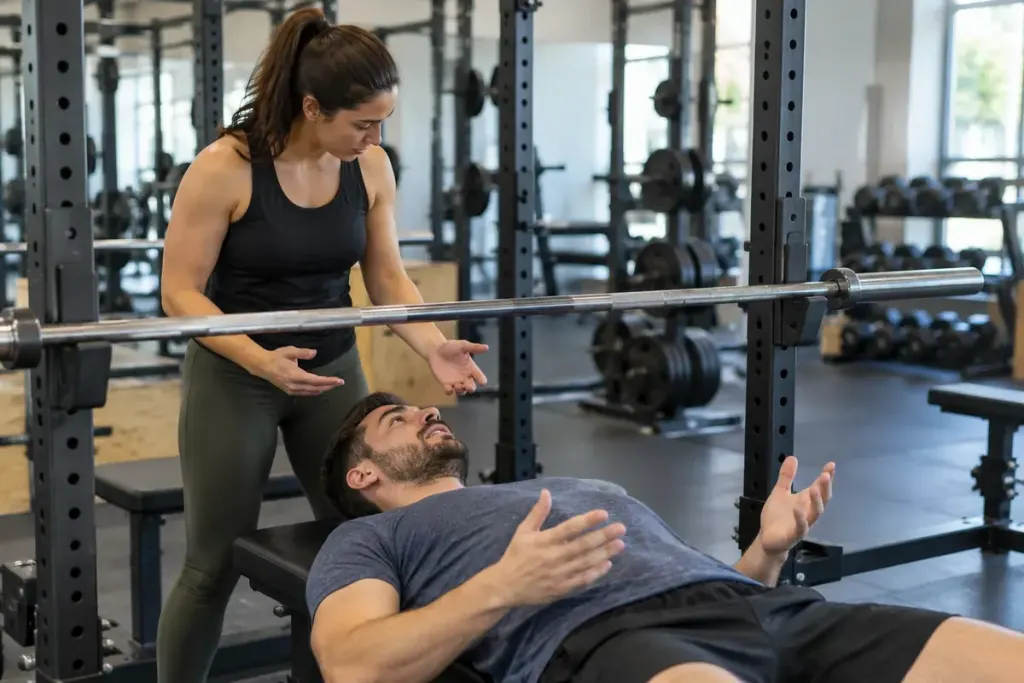
“Can you spot me?” is the beginning of a conversation, not the whole plan. The person helping needs to know the exercise, the intended set and when you want assistance before the weight leaves its support.
The NSCA’s strength and conditioning manual treats communication between lifter and spotter as a shared responsibility. It also distinguishes exercises and situations that require different spotting arrangements. One technique does not safely cover every lift.
Ask someone who knows the task
If you are learning, ask a qualified gym professional to explain the appropriate setup and demonstrate it with a manageable load. Do not assume the nearest strong-looking person knows how to spot the exercise or can control the weight you intend to use.
Agree whether assistance is needed to begin, the expected repetitions, the words or signal for help and how the set will finish. Check the equipment’s safety features with the professional. A spotter does not replace suitable rack settings or sound exercise selection.
Remove ambiguity before effort makes talking difficult
A fictional exchange might be: “This is the exercise and load; I plan five repetitions; please help only when we use the agreed signal, except if immediate safety requires action.” The exact instructions must match the lift and the professional’s guidance, not this generic example.
The spotter should remain attentive for the whole set. Phones, conversation with other people and stepping away defeat the arrangement. The lifter should not unexpectedly add repetitions or change the movement after agreeing the plan.
If either person is unsure, stop and choose a safer setup or a different exercise with professional guidance. Some fast or specialised lifts are not managed by ordinary spotting. The purpose is controlled training, not proving that an improvised rescue will work. A clear conversation before the set is part of the exercise itself.