
The weight on the dumbbell has not changed, but the movement feels steadier and the final repetition looks more like the first. That can be useful progress, even if the training app has no box for it.
Strength practice involves more than adding load. Learning an appropriate movement, controlling the resistance and choosing a manageable dose all contribute to a routine you can repeat.
Define the repetition you are trying to perform
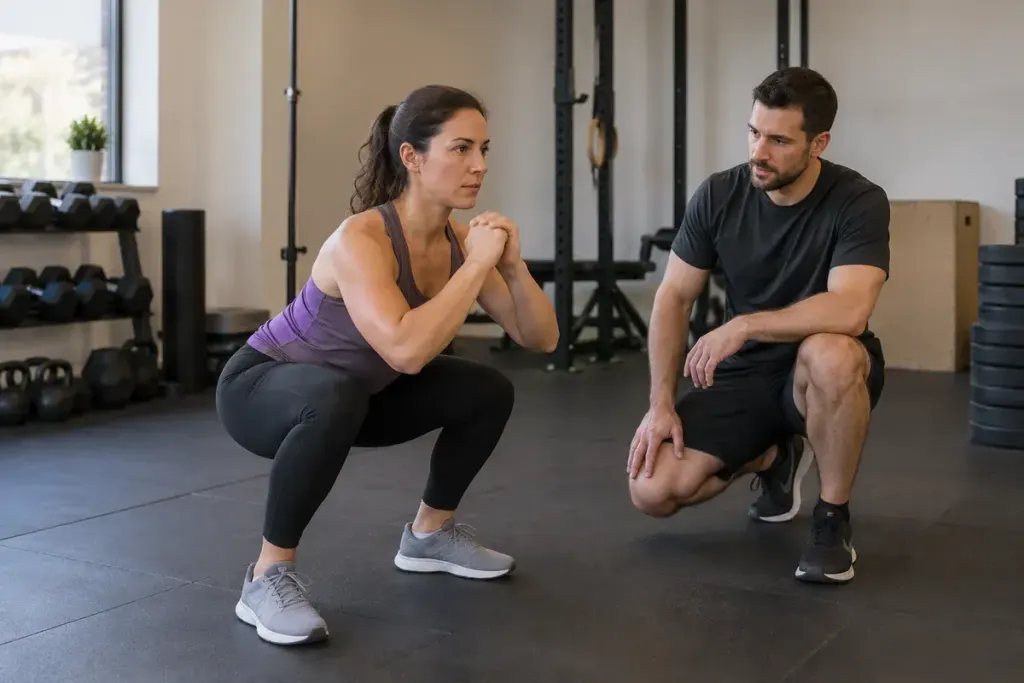
Get instruction appropriate to the exercise and your circumstances. Understand the intended starting position, movement and stopping point rather than copying the appearance of a stranger’s lift. Individual mobility, experience and health can affect suitable options.
Mayo Clinic’s weight-training guidance emphasises proper technique and avoiding rushed movement. It also encourages appropriate professional help when learning. Treat general guidance as a starting point, not a personalised programme.
Watch for the point where quality changes
Notice whether you begin swinging the weight, shortening the intended movement or losing a stable position as the set continues. Those changes can signal that the current task needs adjustment. A heavier number does not automatically make the repetition more useful.
For a simple observation, record the load and a short quality note: “Controlled throughout” or “Needed help to maintain position near the end.” Use language agreed with a qualified trainer where possible, rather than inventing a technical diagnosis.
Change one demand at a time
Progress can involve load, repetitions, sets or exercise difficulty, but increasing everything together makes the response difficult to judge. Follow a suitable plan and allow recovery. Compare sessions under reasonably similar conditions instead of treating a tired day as proof that you have lost all progress.
Video can support a technique discussion when recorded safely and with other people’s privacy respected. It does not replace coaching, particularly for movements where the camera angle hides important details.
Keep discomfort in perspective
Do not push through sharp pain or concerning symptoms to finish a target. Stop and seek appropriate advice. If you have a health condition, recent injury or uncertainty about starting, consult a suitable healthcare or exercise professional.
A good training record can celebrate a better repetition alongside a heavier one. Over time, that broader view helps you build a practice based on control and consistency rather than a weekly argument with the number printed on the weight.