
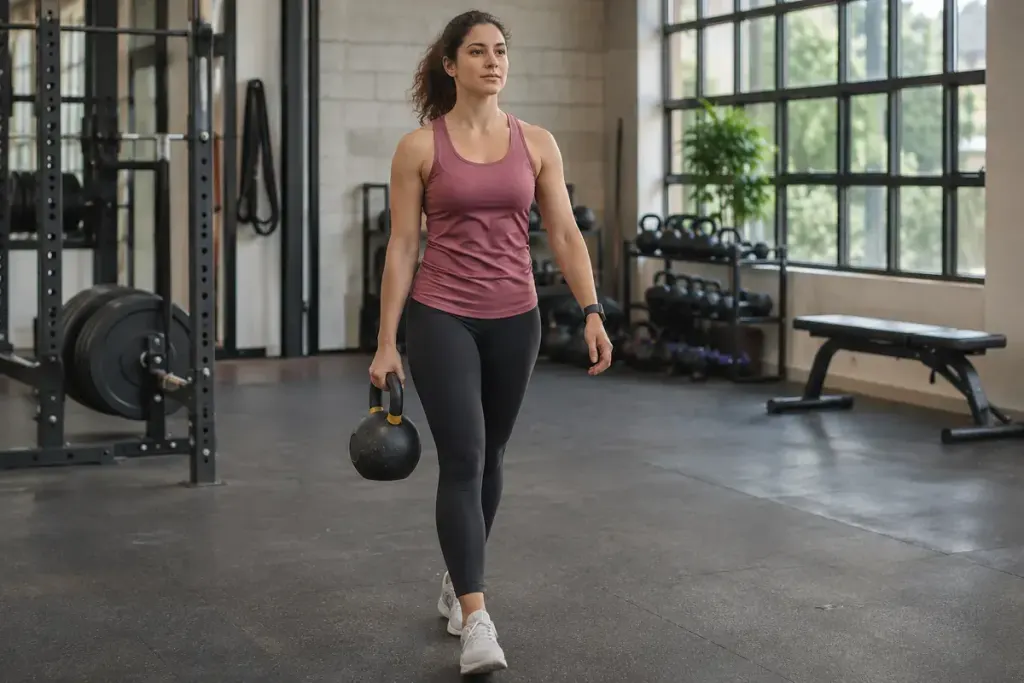
Two people can both say they did “carries” while describing noticeably different exercises. One walked with a weight in each hand; the other carried a single weight on one side. The difference matters when you copy a session or compare your own training notes.
A one-handed suitcase carry places the load on one side. A typical farmers carry uses a load in each hand. Exercise names are not perfectly consistent across programmes, so read the demonstration and instructions as well as the heading. The ACE suitcase-carry example shows the one-handed version, followed by a change of side.
Describe the task you actually performed
Record the implement, weight per hand, side, distance or duration, and rest. “Two 8 kg weights for 20 metres” conveys something different from “one 16 kg weight for 20 metres on each side,” even though the total external weight at one moment can be the same. Those are example log entries, not suggested starting loads.
With a load on one side, notice whether you lean or rotate to keep moving. With two loads, notice whether grip, breathing or posture becomes the limiting factor. The aim is controlled movement appropriate to the programme, not hiding a loss of control to finish an arbitrary distance.
- Choose a clear, level route with room to turn.
- Plan where to pick up and put down the equipment.
- Use a manageable load that allows steady steps.
- End the set before technique deteriorates.
For a unilateral session, record both sides rather than assuming they felt identical. You might find that the route, turn direction or grip affected the experience. Change one variable at a time if you want the log to explain your progress.
A qualified trainer can help select a suitable variation and load. Stop if the movement causes pain, dizziness or other concerning symptoms. There is no need to treat either version as universally superior: the useful choice is the one that fits the person’s ability and the session’s purpose.