
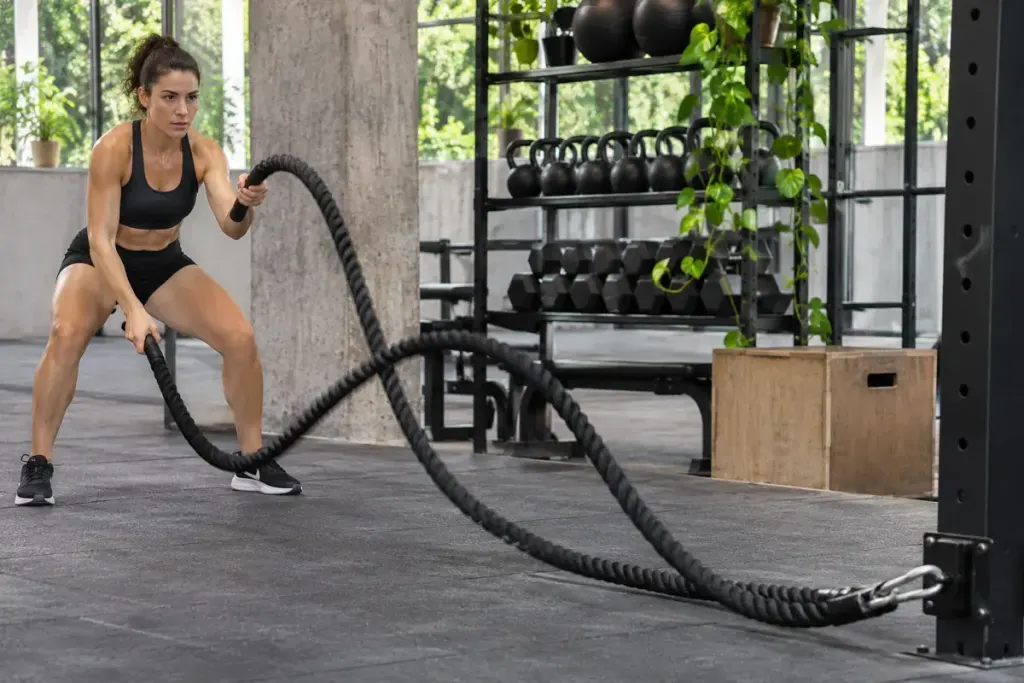
A battle rope that moves smoothly for one person may feel awkward when another stands in a different position. The exercise is shaped by the equipment and setup as well as the effort of the person holding it.
ACE’s research discussion of battle ropes identifies variables including rope length, thickness, wave characteristics and anchor position. This makes a useful point for beginners: a larger wave is not a stand-alone measure of a better workout.
Start at the anchor
Use the gym’s designated, secure attachment point and follow the equipment instructions. Do not loop a rope around an unfamiliar rail, movable bench or another machine because it happens to be nearby. Ask staff to confirm the setup if it is unclear.
Check the working space for people, bags and other obstacles. The rope occupies more floor area once it moves than when it lies still. A clear route around the station matters to other gym users too.
Make your position repeatable
With a trainer’s guidance, find a starting position appropriate to the movement and rope. Standing at a different distance changes the amount of slack and the way the rope behaves. Rather than constantly stepping backwards to chase a dramatic wave, establish a controlled setup you can reproduce.
ACE’s lateral-wave example includes a secure anchor and a deliberate stance. It is one exercise variation, not a prescription to use the same movement, intensity or duration for everyone.
For an ordinary training note, record the rope used, the exercise and the approximate working position alongside the work and rest periods. This makes comparisons more meaningful than recording time alone while the setup changes each session.
Begin at a manageable effort, stop if you feel pain or unwell, and ask a qualified trainer for help with technique or progression. The immediate goal is a controlled movement with a sound attachment and clear space—not the most dramatic-looking wave in the room.