
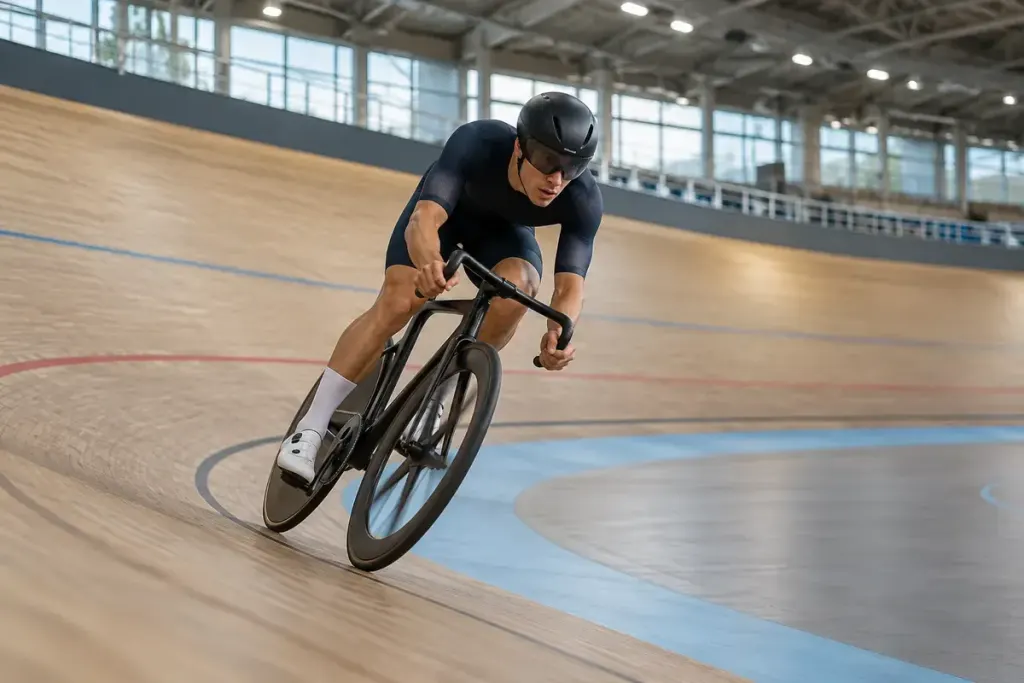
The rider is already travelling quickly when the timed section begins. That is the defining viewing clue in a flying-start time trial: the acceleration phase and the measured effort are not the same stretch of track.
The UCI track regulations describe the relevant events and procedures. Check the event name before interpreting a result; a flying 200-metre effort and a standing-start time trial test different sequences.
Three things to follow on screen
The approach. Notice how the rider builds speed before the timing point. Camera framing can make that preparation look like an ordinary lap, even though it is part of the attempt’s execution.
The timing line. Identify where the measured section begins. The start of a television clip, the start of the rider’s movement and the start of the clock need not coincide.
The finish. Watch where the timed distance ends rather than assuming the next visible line is the relevant one.
Do not compare two headline times without checking distance, start type and event conditions. A shorter flying time is not evidence that a rider would cover the same distance from rest in that time.
For a simple viewing note, record the event, timed distance, start method and round. Then add observations about the approach or line through the track as observations, not a claim to have diagnosed the rider’s technique.
The banked track and specialised riding environment also matter. This is not a drill to reproduce on a public road. Anyone interested in trying track cycling should use a supervised introductory session at an appropriate facility.
Once you separate preparation from measurement, the short burst on the results sheet becomes a more understandable sporting performance.