
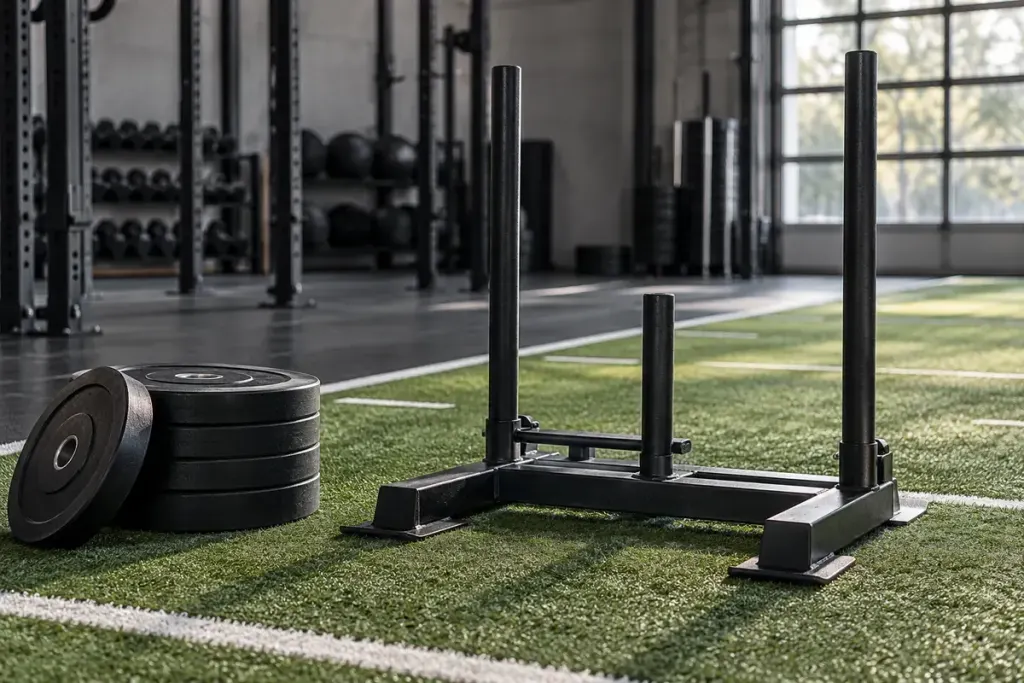
Twenty kilograms added to one gym sled can feel very different from twenty kilograms on another. The plates are only part of the setup. The sled’s own mass, its contact with the floor and the surface beneath it all influence the resistance.
Record the conditions that travel with the number
A useful training note includes the sled model or identifying description, added load, surface, distance and whether the movement was a push or pull. Handle height and direction of travel can also change how the task feels.
Consider two illustrative entries: “20 kg, four lengths” and “same black sled, 20 kg added, indoor turf, four 10-metre pushes from the high handles.” The second is easier to repeat. It does not claim to measure the exact horizontal force, but it preserves more of the conditions that produced the effort.
Do not turn plate mass into a force reading
For a simple sliding model, friction depends on the surfaces and the force pressing them together. Real gym equipment and turf can behave more complicatedly. Starting the sled can also feel different from keeping it moving. The load stamped on a plate is therefore not a direct measurement of the force at your hands.
This matters when comparing facilities. A heavier recorded load at a different gym does not, on its own, demonstrate a sudden improvement in strength or conditioning.
Establish a new baseline after a change
When the sled, floor or setup changes, begin conservatively and learn the new resistance with a qualified trainer if needed. Keep the path clear and follow the facility’s equipment rules. Stop if the equipment catches unexpectedly or the movement causes pain.
For tracking progress, repeat a consistent setup and note how the effort changes over time. A carefully described moderate session is more informative than an impressive plate total with no record of where or how it was moved.