
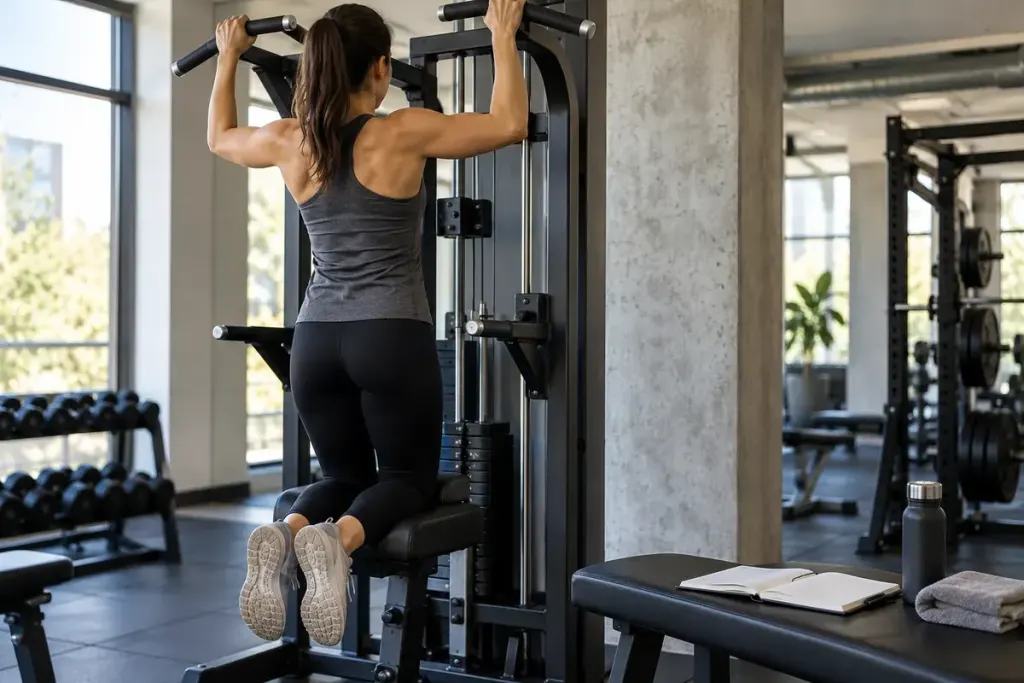
On many assisted pull-up machines, selecting a larger stack number provides more assistance. That reverses the intuition people bring from a conventional lifting machine, where a larger selected load usually means more resistance.
Confirm what the machine’s number means
Read the machine’s instructions and ask qualified gym staff to demonstrate its setup. Designs differ, and the number on a stack should not be assumed to equal an exact reduction in body weight at your hands. Linkages, support position and the machine’s mechanism matter.
Record the setting as assistance, including the units. “Assistance: 30 kg on machine A” is clearer than “pull-ups: 30 kg.” Add the grip, repetitions and relevant setup so the next session is comparable.
Watch the movement as well as the setting
Use the entry, support and exit method shown by the manufacturer or instructor. The moving platform can behave differently as weight is added or removed. Do not step off unexpectedly or change the stack while the machine is loaded.
Keep the range and control consistent when comparing sessions. Reducing assistance while shortening every repetition is a different change from performing the same movement with less help. Neither result should be hidden by a single number in the log.
An illustrative entry might say: “same grip and range; three sets of six; assistance unchanged; final repetitions smoother.” That records progress without requiring an immediate setting reduction. If pain or unusual discomfort occurs, stop and seek appropriate guidance rather than treating it as a logging problem.
Do not compare settings across different machines as though they were calibrated to the same experience. If you change equipment, mark a new baseline. A useful training record describes the task closely enough to repeat it, instead of turning every machine label into a universal measure of strength.