
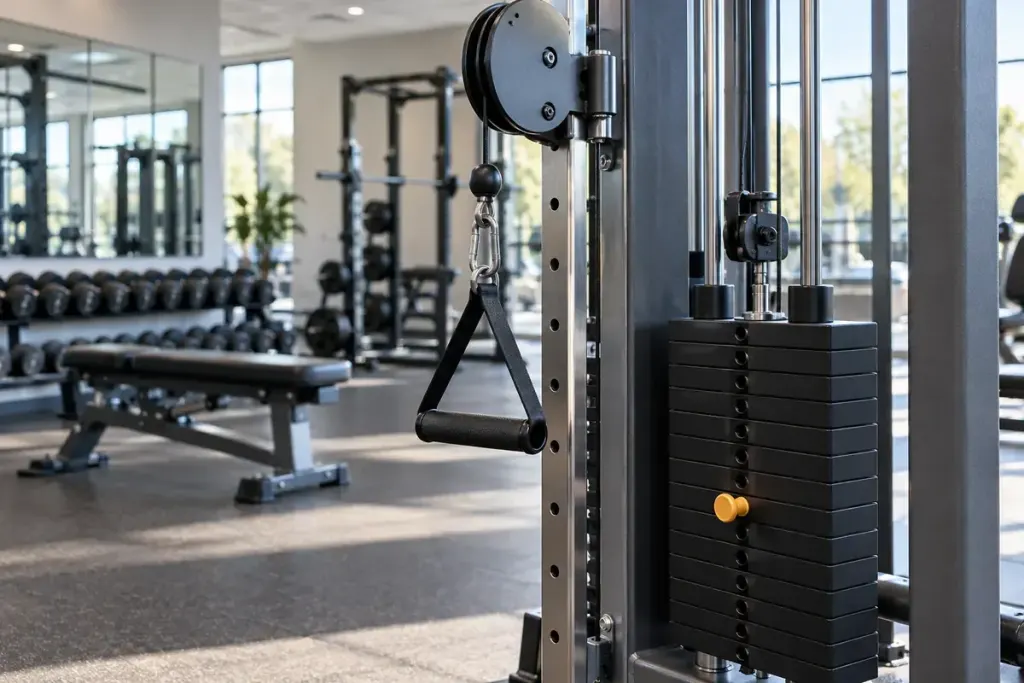
You select the same number on two cable machines, but one exercise feels much lighter on the second machine. The weight-stack label may not describe the force at the handle in the same way on both systems.
Life Fitness explains mechanical advantage in its strength equipment, including different pulley arrangements. The machine’s documentation is the appropriate reference for its ratio and labelling. Do not infer the effective load solely by counting visible pulleys.
Record the setup you actually used
In a training note, include the machine, selected setting, attachment, pulley height and whether the exercise used one or two handles. Also record repetitions and a useful observation about control or effort. That makes a later comparison more meaningful than writing only a number.
For example, “single handle, high pulley, controlled repetitions on machine A” identifies a different setup from a two-handle movement on machine B, even if both stacks show the same setting.
Treat a new machine as a new setup
Ask gym staff to explain its adjustments and intended use. Start conservatively and establish comfortable, controlled movement before increasing resistance. Keep fingers away from moving stacks and use pins and attachments only as the manufacturer intends.
Do not add improvised weights or modify the cable arrangement to make a familiar number feel equivalent. Mechanical advantage, friction and movement path can all affect the experience, and the machine has limits that should be respected.
If pain, unusual movement or equipment damage occurs, stop and seek appropriate help. A training log should support safe decisions, not pressure you to match a number from another machine.
Progress is easier to interpret when conditions remain reasonably consistent. Where they change, note the change openly. The stack is a useful setting on a particular piece of equipment; it is not a universal score that follows you unchanged around every gym.