
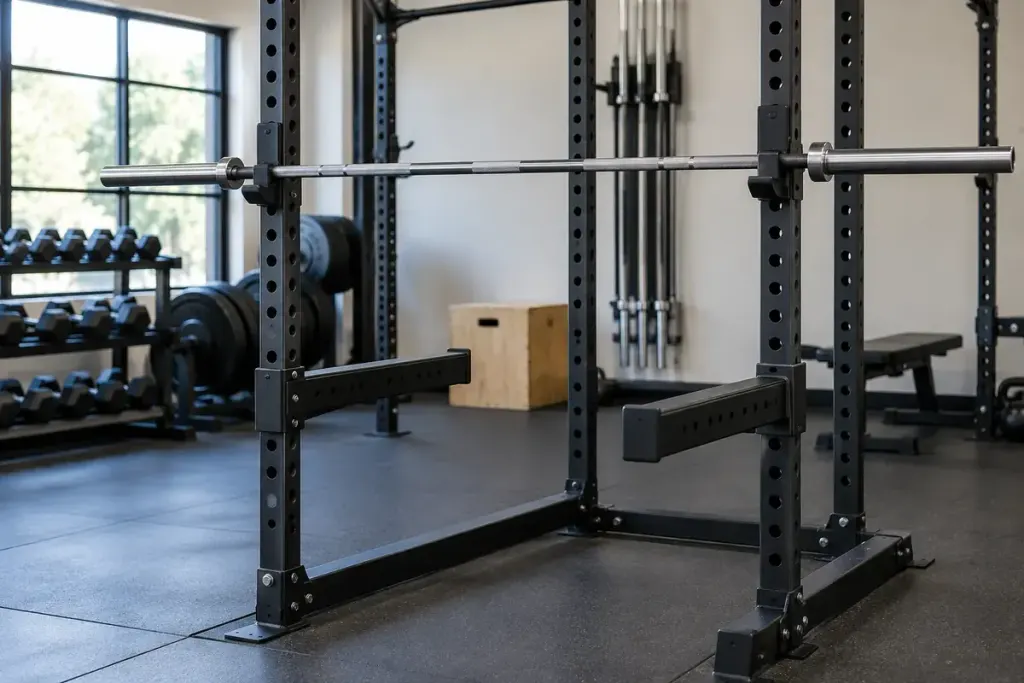
A rack can look ready because a bar is already resting in it. The safety supports may still be set for the previous person’s height, movement or exercise. Treat them as part of your setup, alongside the seat height on a machine.
The rack manufacturer’s instructions and a qualified gym instructor should determine how its supports are fitted and used. Different racks have pins, straps or arms with different attachment methods and limits. A setting that looks symmetrical is not proof that both supports are fully engaged.
Match the support to the movement
Ask an instructor to demonstrate the intended exercise with an unloaded bar and explain the safety position for your range of motion. The support should permit the planned movement while providing the protection the equipment is designed to offer. There is no universal hole number that works for every person or lift.
For example, a bench position changes where the bar travels relative to the rack. Moving the bench after setting the supports can change the arrangement you just checked. Establish the bench and body position first, then have the complete setup reviewed.
- Check that both sides use the intended matching attachment points.
- Confirm pins, latches or straps are secured as the manual specifies.
- Keep the area needed to enter and leave the rack clear.
- Ask how this rack is meant to be used if a repetition cannot be completed.
Practise the setup, not a heavy failure
An unloaded rehearsal lets you notice contact with the supports, awkward reach to the hooks or a bench that shifts. It is not an invitation to test the equipment by dropping a heavy bar. Stop if a fitting is damaged, loose or unfamiliar, and ask staff to inspect it.
Record your usual settings only after a competent person has checked them. Recheck when the exercise, rack or bench changes. A training note such as “rack three, settings confirmed for this bench” is useful context; copying a number from another gym is not.