
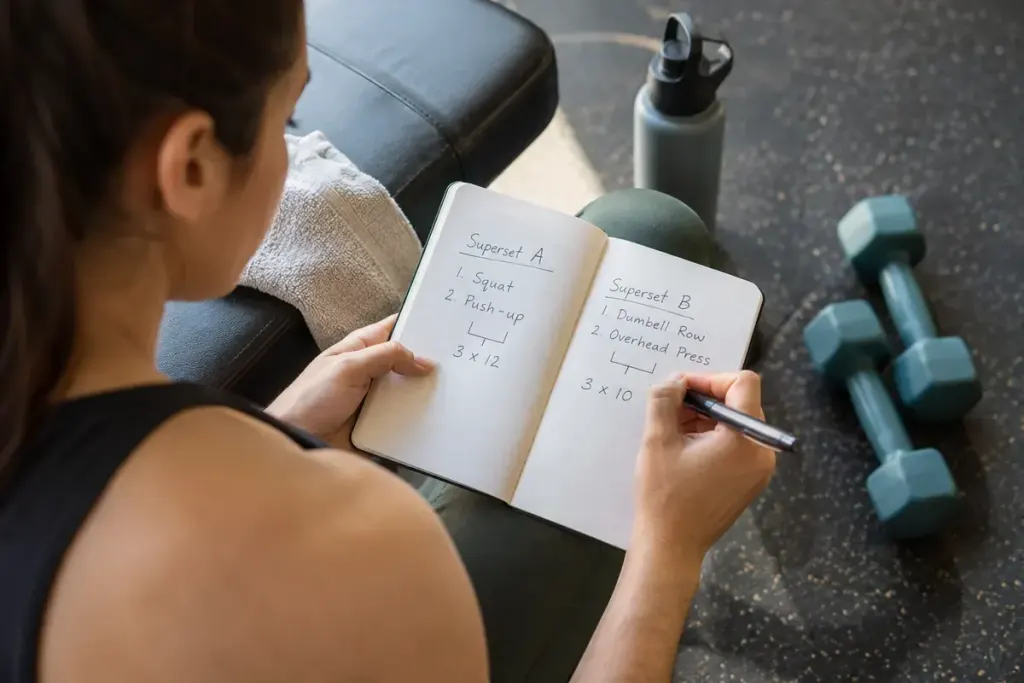
Pairing two exercises can make a gym session feel efficient, but the shorter transition also changes how much recovery you get. A superset is more than a way to fit the same workout into a tighter calendar.
The term is used in several ways. ACE’s explanation of opposing supersets describes alternating exercises for opposing muscle groups with little rest between the pair. Other programmes pair different movements, so read the actual instructions rather than relying on the label.
Keep the purpose visible
If your goal is to practise a difficult movement carefully, rushing into it while fatigued may work against that goal. If the aim is a manageable session using familiar exercises, an appropriate pairing may be useful. The right structure depends on experience, health, exercise choice and the intended training effect.
Ask a qualified trainer to help choose a pairing if you are uncertain. Begin with movements you already perform comfortably, use a manageable load and allow enough recovery to preserve control. Do not turn “little rest” into an instruction to ignore dizziness, pain or loss of technique.
Plan the practical transition
Two exercises requiring equipment on opposite sides of a busy gym can be an awkward pairing. Choose a setup that respects other users and does not depend on reserving several stations at once. Have an alternative if the second piece of equipment is occupied.
Record both exercises, loads, repetitions and rest periods. If the second movement becomes less controlled over the session, reduce the demand or take more recovery. A completed repetition count is not the only sign that the session worked as intended.
Compare future sessions using the same structure. A weight you lift after a long rest is not directly comparable with the same weight immediately after another demanding exercise. Clear notes let you judge progress without mistaking a different fatigue level for a sudden loss of ability.