
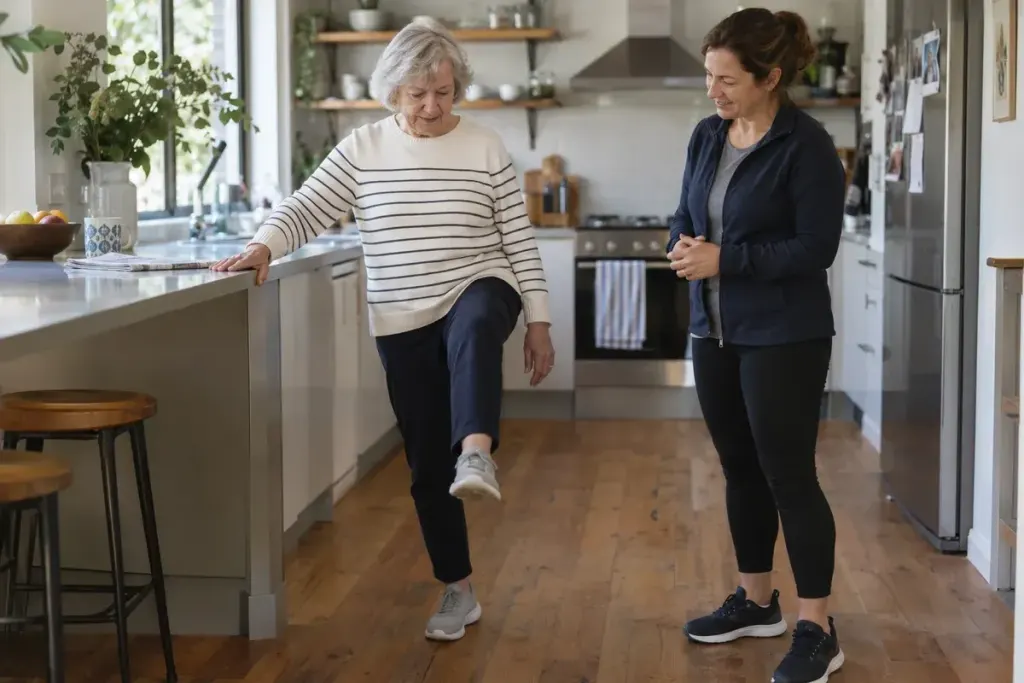
Balance practice does not need to begin on an unstable board. For a beginner, a clear floor and something solid to hold can make it easier to concentrate on controlled movement. The goal is useful practice, not proving that you can manage without support.
Choose a fixed counter or another genuinely stable support that will not slide or tip when you use it. Clear loose rugs and objects from the area, and wear suitable footwear. If you have fallen recently, feel dizzy or are unsure which movements are appropriate, seek advice from a qualified health professional before starting.
Make the starting position comfortable
Stand close enough to the support that you can reach it without lunging. Begin with a simple movement you have been advised is suitable, keeping the range small and the pace unhurried. Breathing normally and looking ahead can help you avoid turning the exercise into a tense endurance test.
The NHS balance exercise guide offers examples with support and gradual progression. Follow the instructions for the selected movement rather than combining several difficult variations at once. A programme may need adaptation for an individual’s health and mobility.
Change one demand at a time
If a movement becomes comfortable, progression might involve a little less hand support or a slightly longer controlled hold, where appropriate. Do not automatically add closed eyes, an unstable surface and extra weight. Each changes the task, and combining them can remove the safety margin.
Stop if you develop pain, dizziness or feel unsafe. An exercise session is not the place to investigate unexplained symptoms by pushing through them. Ask for help when needed, especially if you cannot safely move into or out of the starting position.
- Keep the support within easy reach.
- Use a space free from trip hazards.
- Choose a manageable movement and duration.
- Finish while you can still move with control.
A brief note about what felt steady and what required more support can help you discuss progress with an instructor or clinician. Compare your own control over time rather than another person’s ability to stand on one leg.
Consistent, appropriate practice is more useful than a dramatic challenge attempted once. The support is there to make practice possible; using it is part of the exercise, not evidence that you have failed.