
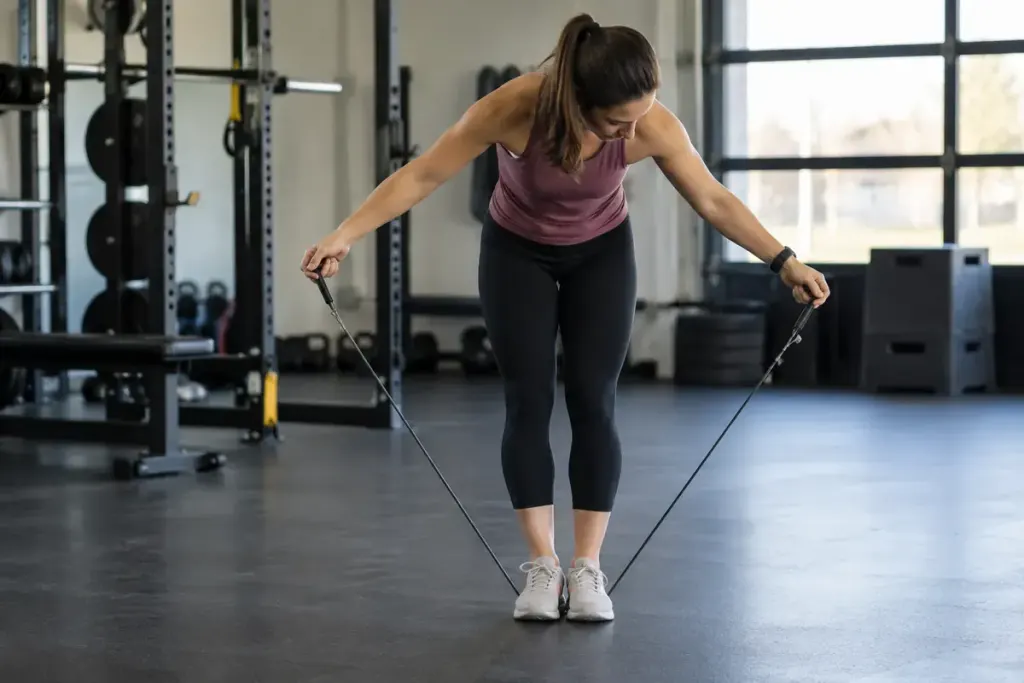
A rope catches your shoes twice, so you jump higher. On the next attempt it slaps the floor well ahead of you. Before turning the session into a test of effort, check whether the equipment suits the way you are trying to move.
Rope length is a starting condition for practice, not a verdict on coordination. A beginner using a relaxed rhythm may prefer a different fit from an experienced skipper working with a compact arm position.
Measure the product the way its maker measures it
Some products use fixed lengths; others can be adjusted at the handles. Handle length and cable construction also differ. Do not assume that a number printed on one brand describes exactly the same measurement on another.
Crossrope’s sizing guide, for example, relates its rope sizes to height and discusses experience when choosing between sizes. Use the instructions for the particular rope in front of you rather than treating a social-media sizing trick as universal.
- Check the stated measurement, adjustment method and any minimum cable allowance.
- Wear the shoes you intend to use and choose a clear space with adequate overhead room.
- Try a short, easy sequence while keeping your hands in a comfortable, consistent position.
- Pause and note where the rope catches or strikes the floor before changing anything.
Change one thing, then repeat the same easy test
Moving your hands wider, lifting your knees and shortening the cable together makes the result difficult to interpret. Keep the movement simple while assessing a small length adjustment. Frequent catches can also reflect timing or an uneven hand position, so length is not the only possible explanation.
If the design requires cutting, first confirm the fit through the reversible adjustments the manufacturer permits. A cable cut too short may need replacement; leaving it dangerously loose inside a handle is not a useful compromise.
For a first practice, write down the setting that felt manageable and stop before fatigue changes the movement. The useful outcome is a repeatable starting point for the next session. Speed can wait until that basic rhythm feels controlled and comfortable.